
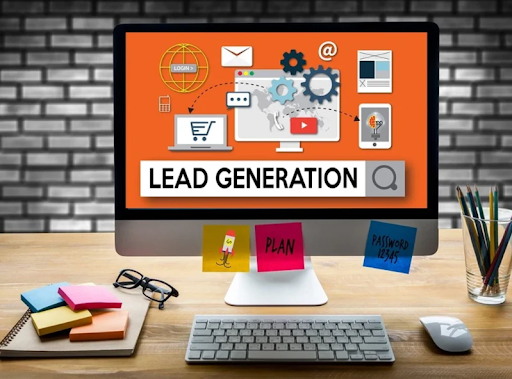
Businesses want people who already have a reason to listen, not every random crowd. The way of getting people interested in what a business sells, and taking their contact details for talking later, is called lead generation. A visitor may download a guide, join a webinar or ask for a quote. After this action, the visitor becomes a lead, and a stranger stands one step nearer to being a customer.
What Counts as a Lead?
A name, an email address, or a phone number left by someone who has shown interest makes that person a lead. The interest can be shown by different ways. Some people fill a form, and some give a reply to an email. Others type a question inside the chat window, or they book a call.
Same value is not there in every lead. Certain people are only looking around, while certain others are already ready for buying. When they are sorted in a right manner, time of the team is saved, and the correct person can make contact at the correct moment.
Why Do Businesses Need a Steady Flow of Prospects?
Nobody is there to buy when there is nobody to sell to, so sales cannot grow. A product, even a very good one, remains hidden if people do not know about it. Regular arrival of interested prospects brings some clear benefits to a business:
- Future customers come through a pipeline, so predicting them becomes easier
- Money of marketing is used in a better way, because focus stays on people with real interest
- Direct contact with the audience is possible, so only social media reach is not the support
- Data is gathered about wants of people and the questions they ask most often
Revenue goes up and down without any fixed pattern when the flow of prospects starts and stops.
How Does the Process Work Step by Step?
One simple line is followed by the process in most cases.
- Attraction: Content, ads, search results or referrals are the ways by which people reach a website or landing page.
- Offer: Contact details are taken, and in return something valuable is given, for example an ebook, a free consultation, a checklist or a discount.
- Capture: A form or a messaging tool does the work of collecting the information.
- Nurturing: Follow-up emails, calls or messages make the trust grow slowly.
- Handoff: Strong interest from a prospect means the conversation is taken over by the sales team.
Importance is there in every stage. Weak result in one stage gives lower results in the stages coming after it.
Which Channels Bring the Most Prospects?
Audience is different from one place to another, so the best channel is also different. Some common channels are given below:
- Search engine optimization: People who are already searching for answers are brought by helpful content with good ranking.
- Email marketing: Visibility of the business stays with the people who agreed to receive messages.
- Social media: Interest and behavior of people decide who is reached by posts and paid campaigns.
- Paid search ads: Exactly at the time of someone searching a particular service, the ad is shown.
- Referrals and partnerships: Suggestions coming from trusted contacts often convert well.
- Events and webinars: Live questions can be asked, and experts can be met directly.
A channel which is best for everybody does not exist. Audience, industry and quality of the offer are the things that decide the result.
What Is the Difference Between a Marketing Qualified and a Sales Qualified Lead?
Marketing qualified lead is the name for a person who has engaged with marketing material, like downloading a resource or opening many emails, but maybe is not yet ready to buy. Different is the sales qualified lead. Checking is done for this one, and readiness for a direct sales conversation is found. Usually a clear need, budget and timeline are present in such case.
Sales teams do not waste their effort on people who are not ready, because of this separation. Also, ignoring of promising prospects does not happen.
How Is Success Measured?
Numbers are the way to see if the efforts are working. These measurements are used the most:
- Conversion rate: Percentage of visitors who become leads
- Cost per lead: Money spent for getting each lead
- Lead-to-customer rate: Share of leads who finally buy
- Response time: Speed of the follow-up after first contact
As much as quantity, quality also matters. Less value can be there in a hundred contacts with little interest than in ten contacts who truly need the product.
Why Do Some Efforts Fail?
Behind most failures, a few problems are repeating again and again. People avoid signing up if too much information is asked by forms. The wrong people come in when the offer does not match with the wants of the audience. Slow follow-up can kill the interest within a few hours. Poor tracking makes it impossible to know which channels need more attention.
Gap between marketing and sales teams is another common problem. Promising contacts get lost in the middle when both groups have different thinking about what a good prospect is.
Conclusion
One simple idea is the base of successful lead generation. Attracting the right people, offering something useful, and building trust before asking for any sale are the things needed. Interest turns into long-term customer relationships when the process is clear, measured and matched with the real needs of the audience.